Stay Connected to
the Current!
The Ville's next chapter is being written right now. Get neighborhood news, upcoming events, and stories of restoration, straight to your inbox. No noise, just roots.
St. Louis and the Exoduster Crisis of 1879
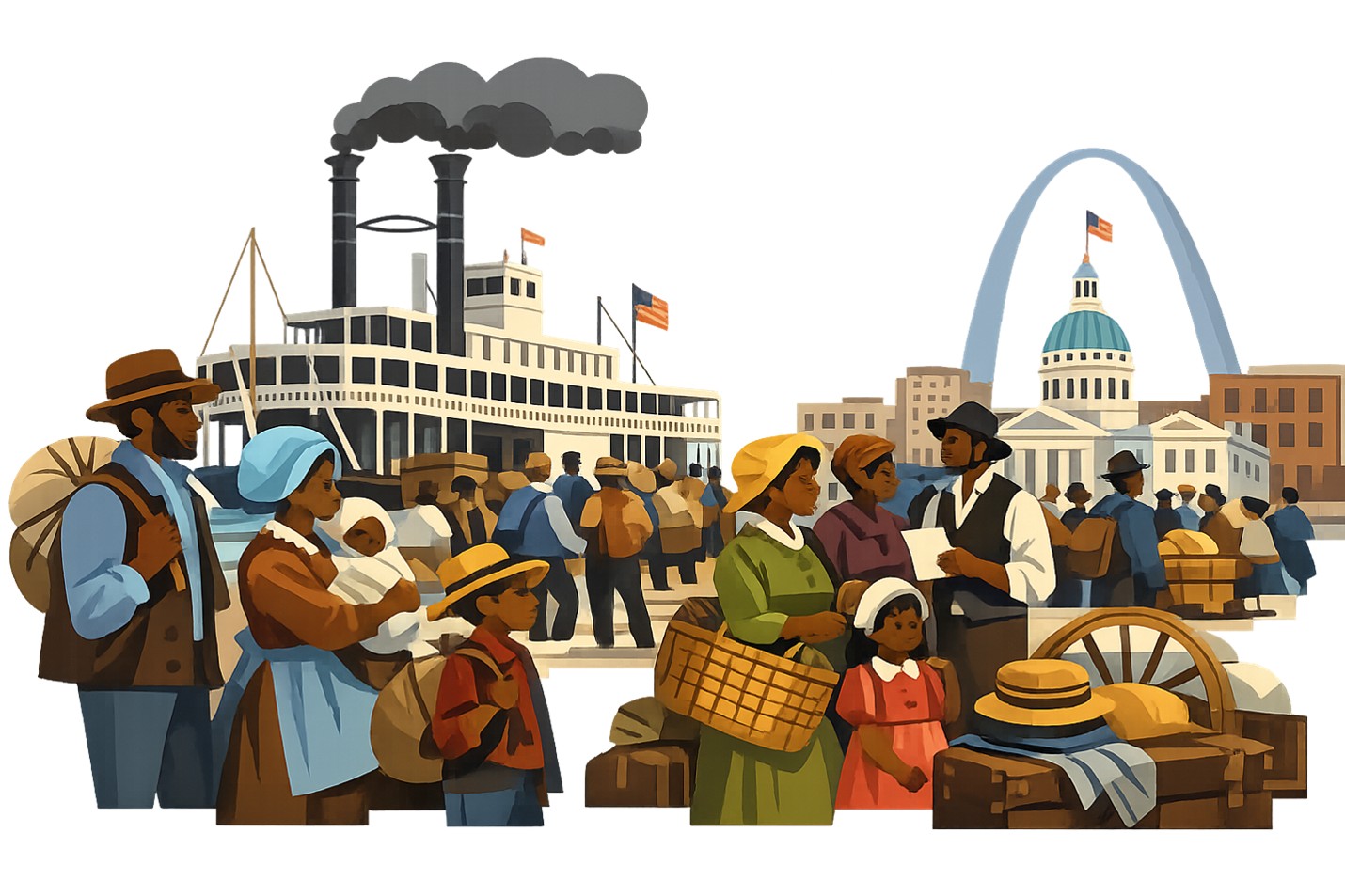
The Colored Refugee Relief Board was one of the most important African American humanitarian organizations of the Reconstruction era. Established in St. Louis, Missouri, in 1879, the Board emerged in response to the sudden arrival of thousands of African American migrants—known as Exodusters—who were fleeing violence, political repression, economic exploitation, and the collapse of Reconstruction throughout the South.
The Exoduster Movement began in earnest in 1879, when thousands of African Americans from Louisiana, Mississippi, Texas, and other Southern states sought new opportunities in Kansas and other western territories. The movement was driven by the failure of Reconstruction, the rise of white supremacist violence, the erosion of Black political rights, exploitative labor systems, and widespread disappointment with conditions in the post-emancipation South.
Because of its location at the confluence of major river transportation routes, St. Louis became a principal gateway for Black migrants traveling westward. Between 1879 and 1880, an estimated 20,000 Exodusters passed through or arrived in the city. Many expected to continue to Kansas but became stranded due to a lack of transportation, money, housing, and employment opportunities. Local government officials provided little organized assistance, leaving much of the humanitarian response to St. Louis’s African American community.
In March 1879, prominent Black leaders organized what became known as the Committee of Twenty-Five to coordinate relief efforts. Among its leading figures were Reverend John Turner, James Milton Turner, Moses Dickson, John Wheeler, and Charlton Tandy. As disagreements emerged regarding long-term migration strategies, the organization divided into separate entities. The Colored Refugee Relief Board assumed primary responsibility for providing immediate humanitarian assistance, while other organizations focused on colonization and settlement efforts in the West.
Under the leadership of activists including Charlton Tandy and Reverend Moses Dickson, the Colored Refugee Relief Board provided food, clothing, shelter, medical assistance, and transportation for displaced migrants. The Board established offices near the St. Louis riverfront, coordinated temporary housing, raised funds from supporters throughout the United States, and worked with churches and charitable organizations to meet the needs of thousands of refugees. Its efforts prevented widespread suffering among migrants who often arrived with little more than the clothes they were wearing.
The Board’s work represented one of the largest African American-led humanitarian relief efforts of the nineteenth century. At a time when Black communities faced discrimination, limited financial resources, and exclusion from many public institutions, African American churches, civic leaders, and mutual aid organizations mobilized to address a crisis that local and state authorities were largely unwilling to solve. The Colored Refugee Relief Board demonstrated the capacity of Black institutions to organize large-scale relief efforts and exercise leadership during a period of national retreat from Reconstruction-era civil rights protections.
The Board also played an important role in shaping public awareness of the Exoduster Movement. Charlton Tandy traveled throughout the country to raise funds, advocate for migrants, meet with federal officials, and bring national attention to the conditions that were driving African Americans from the South. Through these efforts, the Board transformed what might have been viewed as a local refugee crisis into a national discussion about racial violence, economic justice, and the unfinished promises of emancipation.
The legacy of the Colored Refugee Relief Board extends beyond its immediate relief work. The organization stands as a powerful example of African American self-help, institution-building, and collective action during one of the most difficult periods in American history. Its leaders recognized that freedom required more than emancipation; it required access to safety, opportunity, transportation, education, and economic independence.
Today, the Colored Refugee Relief Board is remembered as a landmark institution in African American history. Its work illustrates how Black communities responded to crisis through organization, mutual aid, and leadership, helping thousands of formerly enslaved people and their descendants pursue new lives in the American West while advancing the broader struggle for equality and self-determination.