Stay Connected to
the Current!
The Ville's next chapter is being written right now. Get neighborhood news, upcoming events, and stories of restoration, straight to your inbox. No noise, just roots.
A Symbol of Black Educational Resistance on the Mississippi River
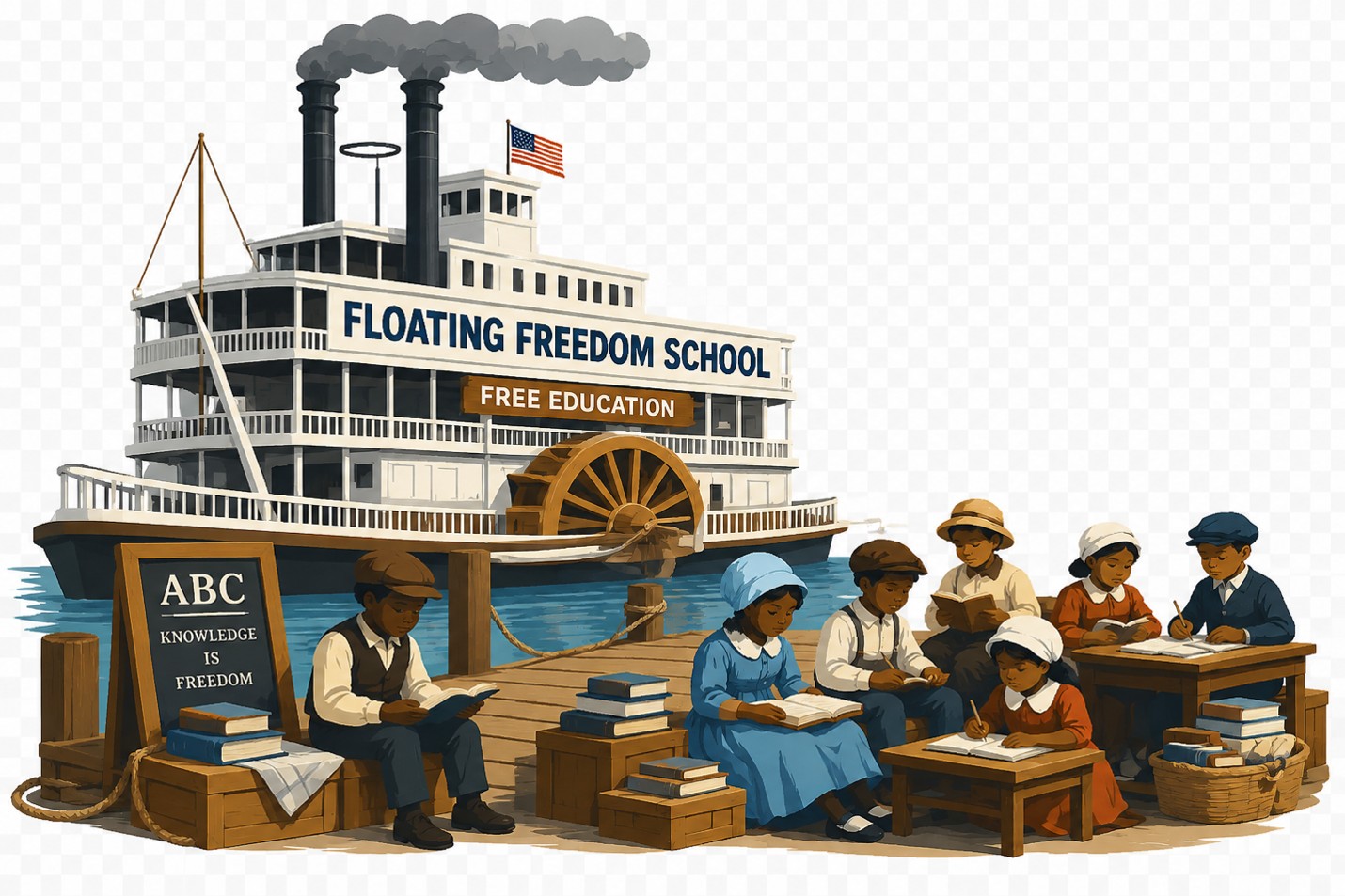
The Floating Freedom School was one of the most remarkable acts of educational resistance in pre–Civil War America. Established by Reverend John Berry Meachum and Mary Meachum, a formerly enslaved African American minister, educator, businessman, and abolitionist in St. Louis, Missouri, the school demonstrated the determination of Black communities to pursue knowledge despite legal efforts to deny them educational opportunities.
Before Missouri restricted Black education, Meachum had already founded schools that provided instruction to African Americans in St. Louis. However, in 1847, Missouri enacted a law prohibiting the education of enslaved African Americans, reflecting widespread fears among slaveholders that literacy would encourage resistance to slavery and strengthen demands for freedom. Although the law specifically targeted enslaved people, its effects contributed to broader barriers to Black education throughout the state.
Rather than abandon his mission, Meachum adapted. He moved instruction to a vessel moored on the Mississippi River near St. Louis, creating what became known as the Floating Freedom School. Historians generally agree that Meachum believed conducting classes on navigable waters under federal authority offered a practical means of continuing educational instruction beyond the immediate reach of Missouri’s restrictions. While the precise legal protections afforded by this arrangement remain debated, the school successfully operated as a center of learning for African Americans despite a hostile legal environment.
The Floating Freedom School provided instruction in reading, writing, arithmetic, religious studies, and practical knowledge. For both free and enslaved African Americans, literacy represented far more than academic achievement; it was a pathway to personal autonomy, economic opportunity, civic participation, and human dignity. At a time when many states sought to restrict Black access to education, Meachum affirmed the revolutionary idea that knowledge should not be limited by race or legal status.
The school’s significance extends beyond its classroom instruction. It embodied a broader tradition of African American self-help, institution-building, and resistance that existed long before emancipation. Black churches, mutual aid societies, educators, and community leaders throughout the United States worked tirelessly to create opportunities for learning despite systemic discrimination. The Floating Freedom School stands as one of the clearest and most creative examples of that tradition.
Today, the Floating Freedom School is remembered as a powerful symbol of educational freedom and Black resilience. It illustrates how African Americans challenged oppressive laws not only through protest and political action but also through the pursuit of knowledge itself. The legacy of John Berry Meachum’s school remains an enduring reminder that education has long been central to the struggle for freedom, equality, and citizenship in American history.